1926  recordings

Beulah logo

contents

serach site

[W3C HTML 4.01]

Follow Beulah on Facebook

1926 recordings

 The earliest recording technologies were entirely mechanical devices typically using a large conical horn to collect and focus the physical air pressure of the sound waves produced by the human voice or musical instruments. A sensitive membrane or diaphragm, located at the apex of the cone, was connected to an articulated scriber or stylus, and as the changing air pressure moved the diaphragm back and forth, the stylus scratched a groove of the sound waves onto a moving recording medium. These early recordings were of low fidelity and volume and captured only a narrow segment of the audible sound spectrum — typically only from around 250 Hz up to about 2,500 Hz — so musicians and engineers were forced to adapt to these sonic limitations. Musical ensembles of the period often favored louder instruments such as trumpet, cornet, and trombone; lower-register brass instruments such as the tuba and the euphonium doubled or replaced the double bass, and blocks of wood stood in for bass drums. Performers also had to arrange themselves strategically around the horn to balance the sound, and to play as loudly as possible.

The second wave of sound recording was ushered in by the introduction of Western Electric's integrated system of electrical microphones, electronic signal amplifiers and electromechanical recorder first introduced in the USA in 1925 and  reached Europe by 1926. It greatly improved the fidelity of sound recording, increasing the reproducible frequency range to a much wider band (between 60 Hz and 6000 Hz covering almost all fundemental notes ). It was also possible to setup recording equipment in locations away from the recording studio.  This enabled large choirs and full orchestras to be recorded  in concert halls, churches and other venues.

Here are recordings made in 1926 which we have remastered on Beulah.

1PD1

1PD1

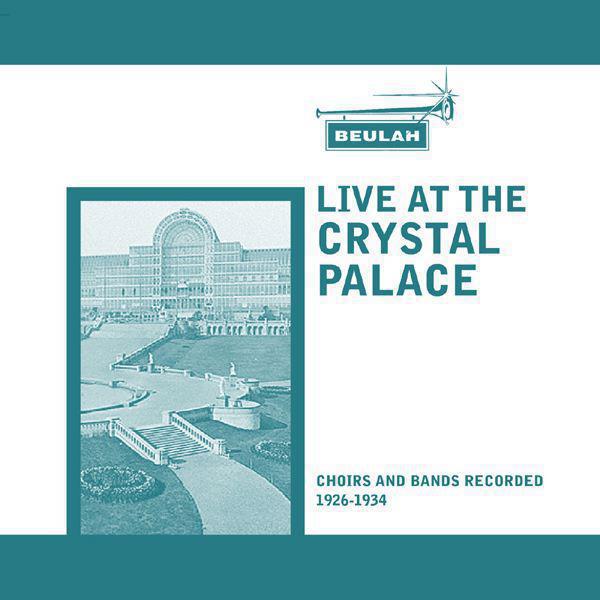
Live at the Crystal Palace

(only available on Spotify)

spotify


This album includes two tracks recorded at the final Triennial Handel Festival held at the Crystal Palace in 1926, leading a massive combined choir and orchestra of approximately 3,500 performers. This event marked the end of the traditional "monster" Handel festivals that had taken place every three years, for which Sir Henry Wood succeeded Sir Frederic Cowen as conductor.

The tracks in question on this album are 2. Hallelujah Chorus and 3. Behold the Lamb Of God.

It would not have been possible to record thses tracks using the acoustic system

1PS19

1PD1

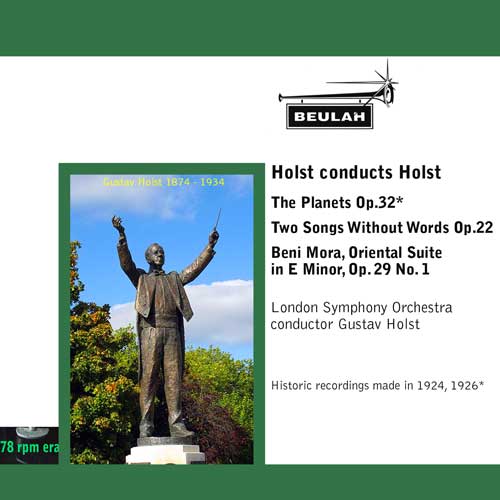
Holst conducts Holst

(only available on Spotify)

spotify

Composer of the Planets Suite, Gustav Holst, conducted two recordings of the work. The first recording was an acoustic recording of an abreviated version made in sessions between September 1922 and November 1923. With the advet of eletrical recordings Holst returned in 1926 to conduct the Lonodn Symphony Orcheestra in the Columbia Studio in Petty France.

1PS57

1PS57

Beethoven - Historic 1926 Recordings Symphonies 3 and 4

spotify

spotify

spotify

Sir Henry Wood conducts his New Queens Hall Orchestra in Symphony No 3 while Sir Hamilton Harty conducts the Hallé Orchestra in Symphony No 4